Cisco 3750 Switch Ios For Gns3 Tutorial
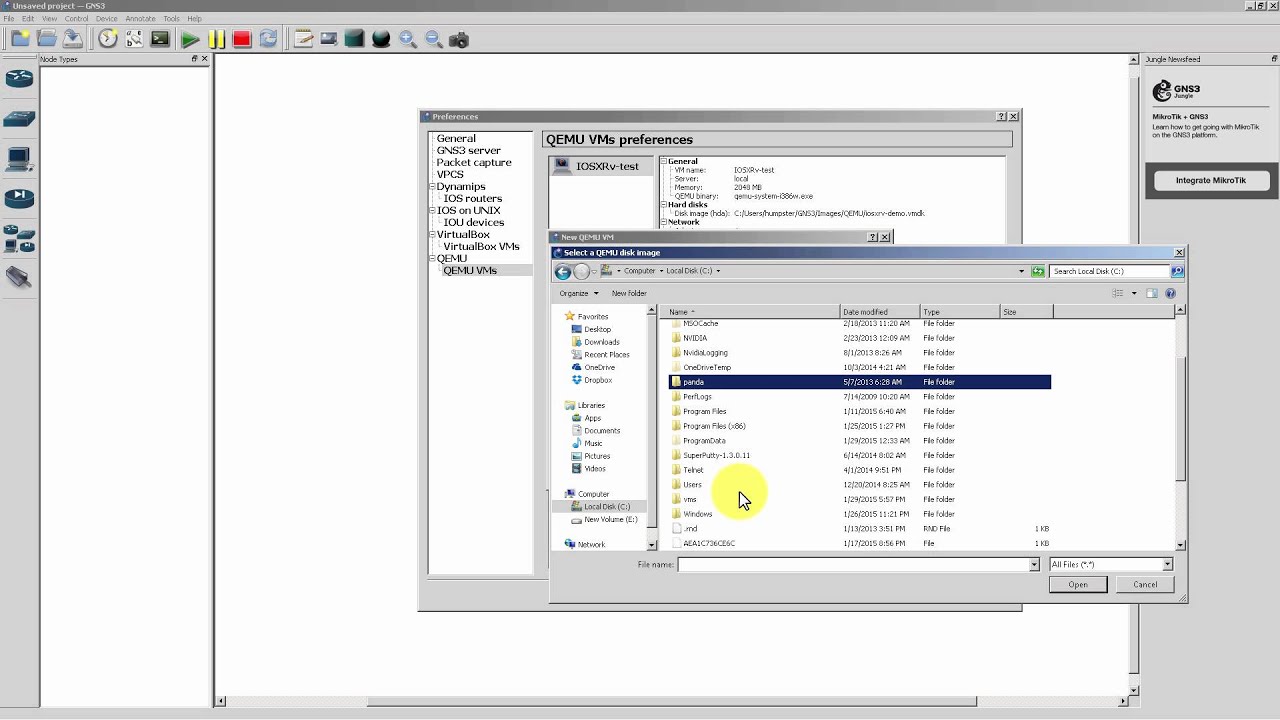
Hi all, Just starting out with GNS3 and stumbling a bit:) I've read through a few posts and how to's but not yet found answers to all my issues hence my post. 1) Is is possible to simulate a Cisco 3750 switch of do I need to work with the default ethernet switch provided by GNS3? (I have the IOS) 2) When. Jan 15, 2013 - Hi frnds, I have two 3750 spare switches in my company. So i wanna connect my real 3750 switches using GNS3.is it po 50634. Yes, very much so. I have many posts regarding such a setup, using linux/gns3 to 3750 for qiniq to 4x3560 switches. See posts here. And you'll also find.
Hi all, Just starting out with GNS3 and stumbling a bit:) I've read through a few posts and how to's but not yet found answers to all my issues hence my post. 1) Is is possible to simulate a Cisco 3750 switch of do I need to work with the default ethernet switch provided by GNS3? (I have the IOS) 2) When creating a pix from an IOS, I do not see the option to choose that platform: eg platform C3700 model 3725. There is no option to choose a PIX platform. Hope that makes sense! Greatly appreciate any replies.
UPDATED: Dec,2016 – Cisco Catalysts switches equipped with the Enhanced Multilayer Image (EMI) can work as Layer 3 devices with full routing capabilities. For example, some switch models that support layer 3 routing are the 3550, 3750, 3560 etc. On a Layer3-capable switch, the port interfaces work as Layer 2 access ports by default, but you can also configure them as “ Routed Ports” which act as normal router interfaces. Operating System By Milan Milenkovic Pdf there. That is, you can assign an IP address directly on the routed port. Moreover, you can configure also a Switch Vlan Interface ( SVI) with the “interface vlan” command which acts as a virtual layer 3 interface on the Layer3 switch.
If you don’t have a Layer3 switch available, you can also configure InterVLAN routing using a simple Layer2 switch and a Router (also called ). On this post I will describe a scenario with a Layer3 switch acting as “Inter Vlan Routing” device together with two Layer2 switches acting as closet access switches. Harrison L5 Lathe Manuals. Moreover, a Cisco ASA firewall will provide Internet connectivity for all internal subnets.
International Master Diagnostics Keygens. A Routed Port will be configured between the Layer3 Switch and ASA internal interface to route packets towards the internet (via the ASA). The focus of this article is to show you how to configure the Layer2 and Layer3 switches to provide routing between VLANs. At the end of this article you will find also important routing configuration commands for the ASA and also how to use Access Control Lists (ACL) on the Layer 3 switch to control traffic (permit or deny) between VLANs at Layer3 level. This is a fairly popular network scenario that I have seen in many enterprise networks. See the diagram below to get the whole picture: Interface Fa0/48 of the Layer3 switch is configured as a Routed Port with IP address 10.0.0.1 and connected to ASA inside interface (10.0.0.2).
Two Vlans need to be created on the L2 and L3 switches, Vlan10 and Vlan20. Of course you can expand this scenario with more Vlans and more Layer 2 switches as needed. On the Layer3 Switch, for Vlan10 we will create an SVI with IP address 10.10.10.10 and for Vlan20 an SVI with IP address 10.20.20.20. These two IP addresses will serve as the default gateway addresses for hosts belonging to Vlan10 and Vlan20 on the Layer2 switches respectively. That is, hosts connected to Vlan10 on the closet L2 switches will have as default gateway the IP address 10.10.10.10.